


Gelephu Mindfulness City
Gelephu, Bhutan
Client
The Kingdom of Bhutan
Typology
Infrastructure
Status
In Design

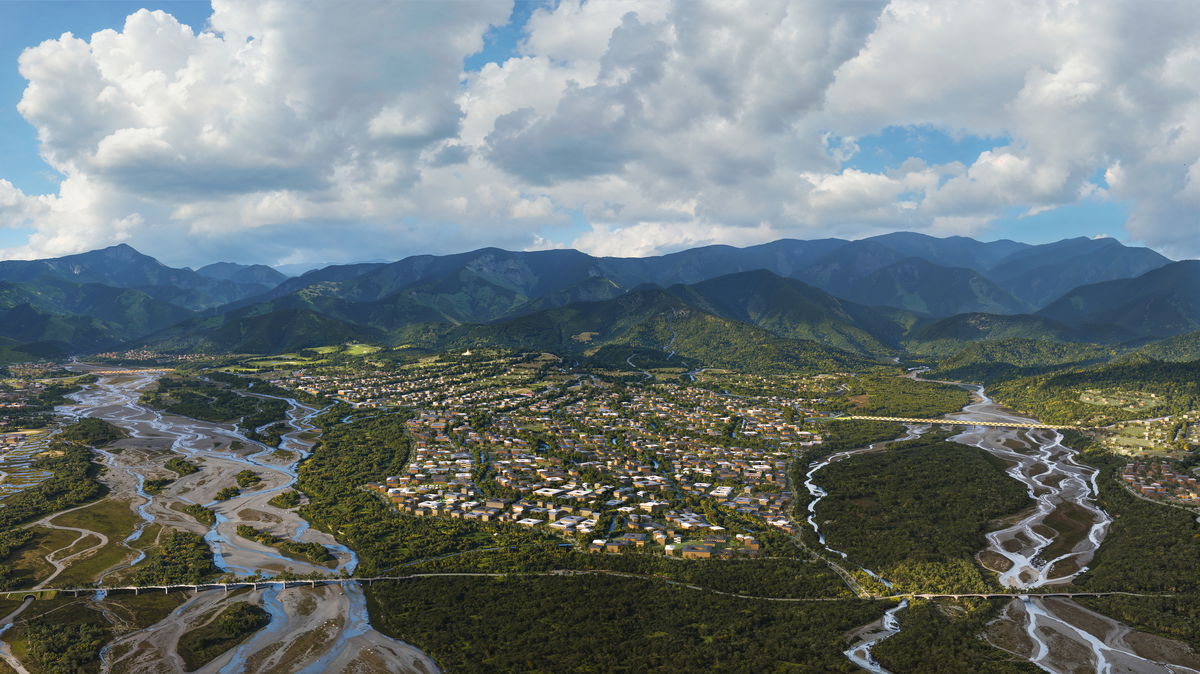
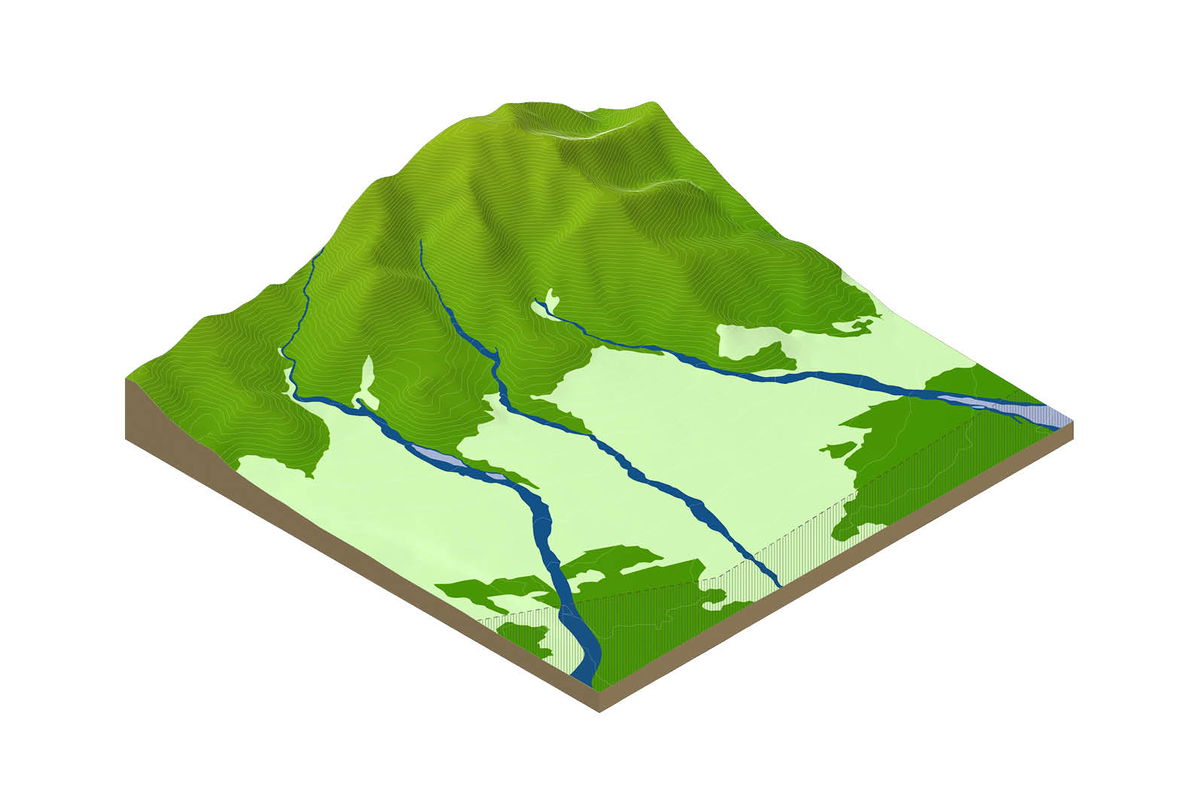
— Gelephu's existing site conditions.
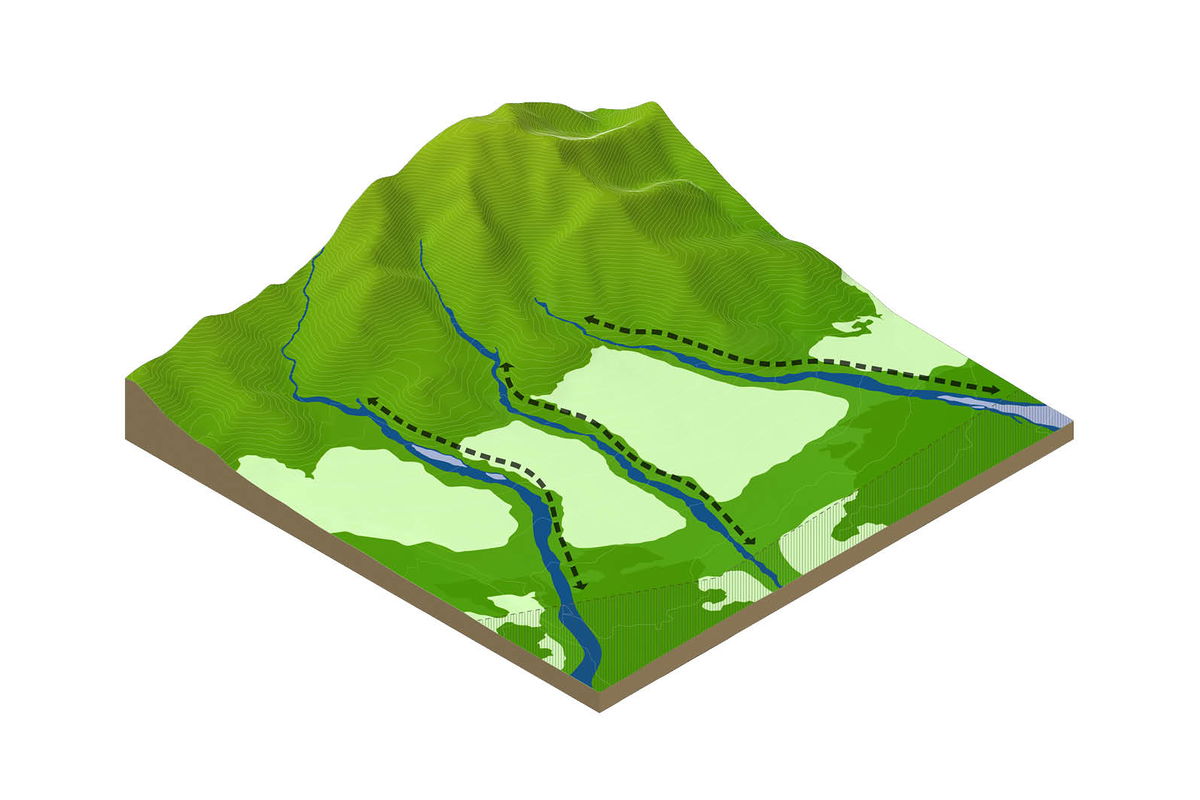
— 35 rivers run across the site, bringing water from the mountains in the north down to the south.
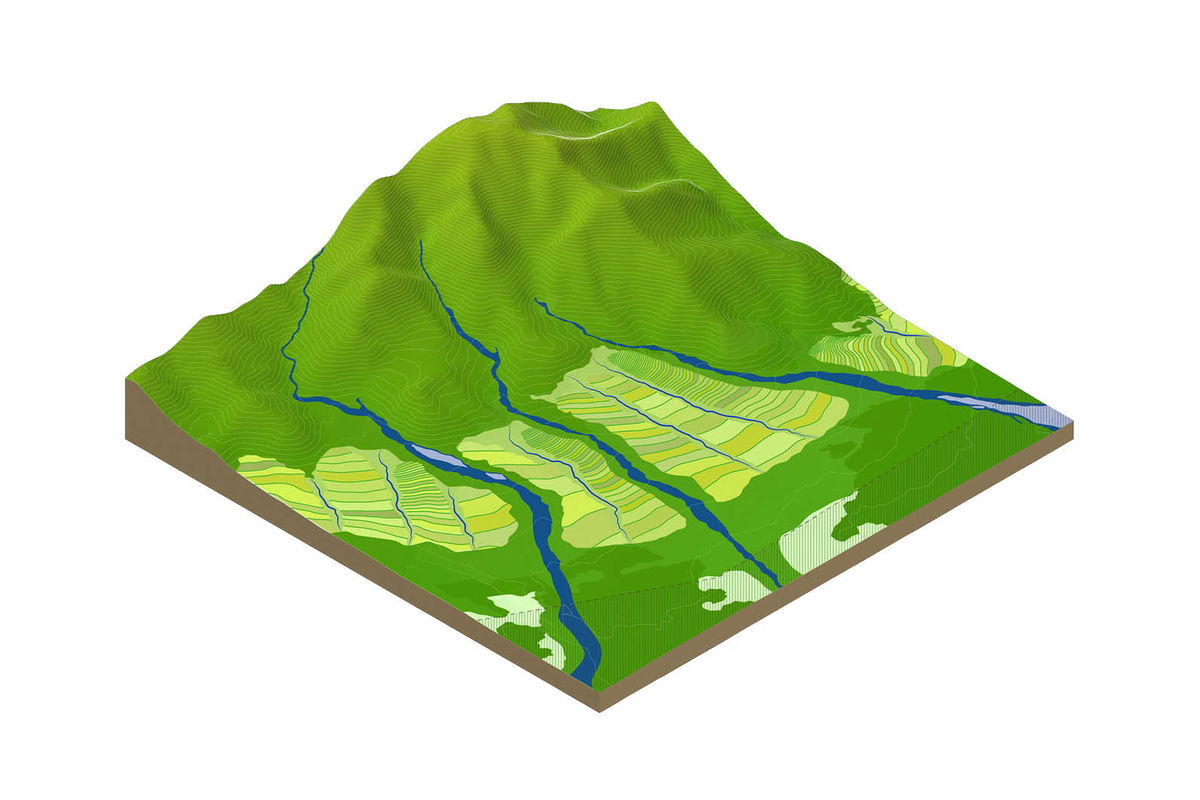
— To protect existing and future development against flooding in the monsoon season, paddy fields are established along the site’s rivers.
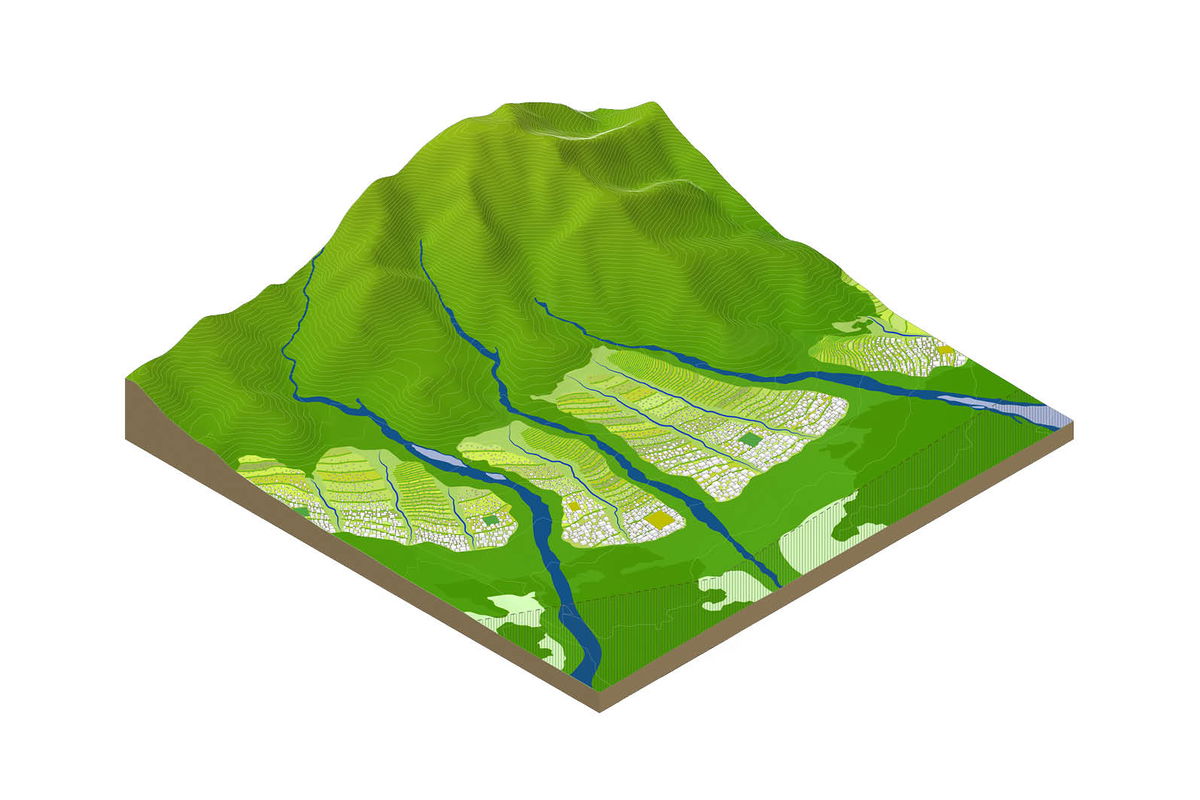
— A gradual change in density of the developments is created, from small buildings dispersed in the landscape in the north to larger footprints within an urban environment in the south.
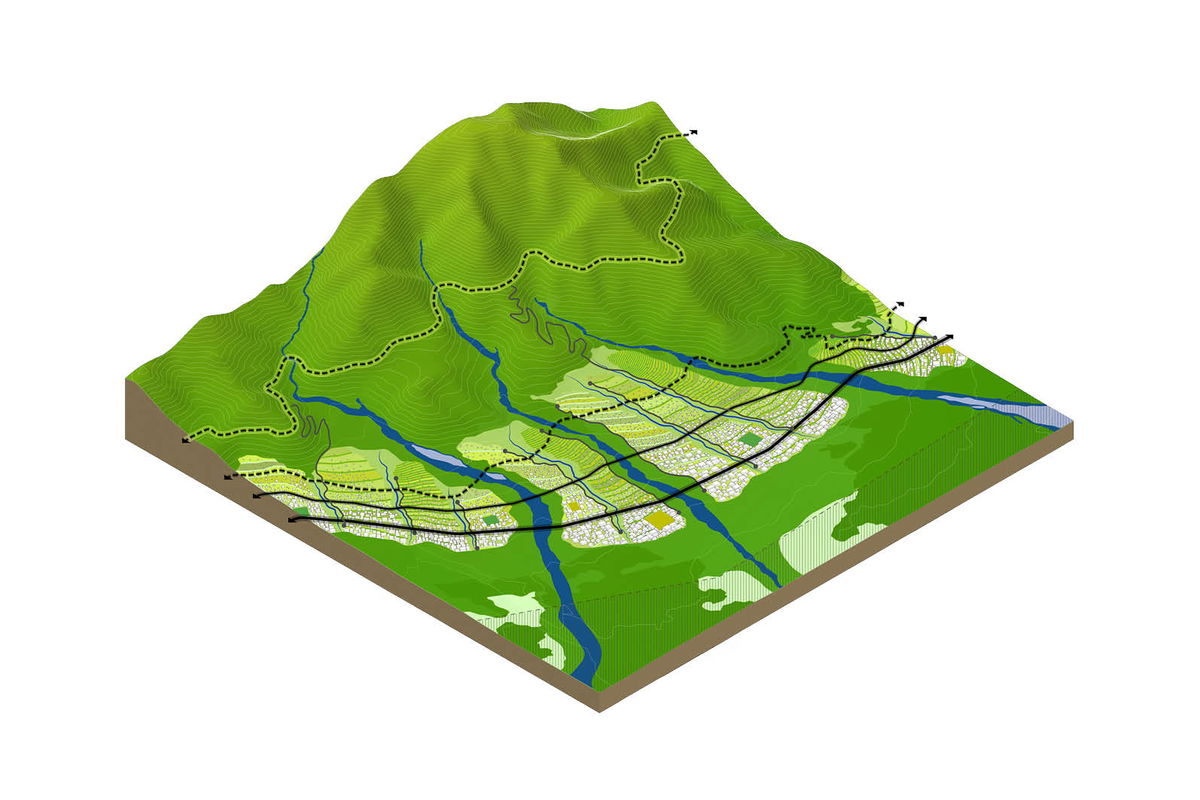
— Mobility connections for public and vehicular transport as well as pedestrians run across Mindfulness City and connect all neighborhoods.
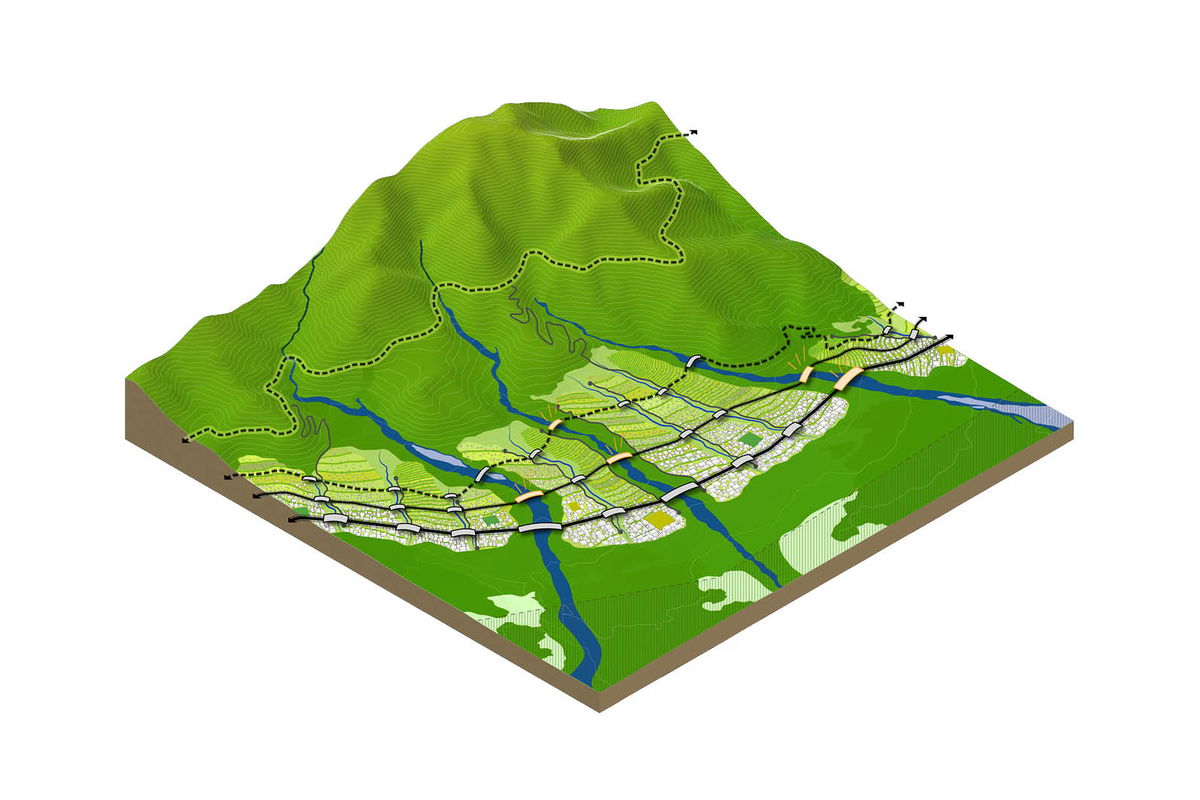
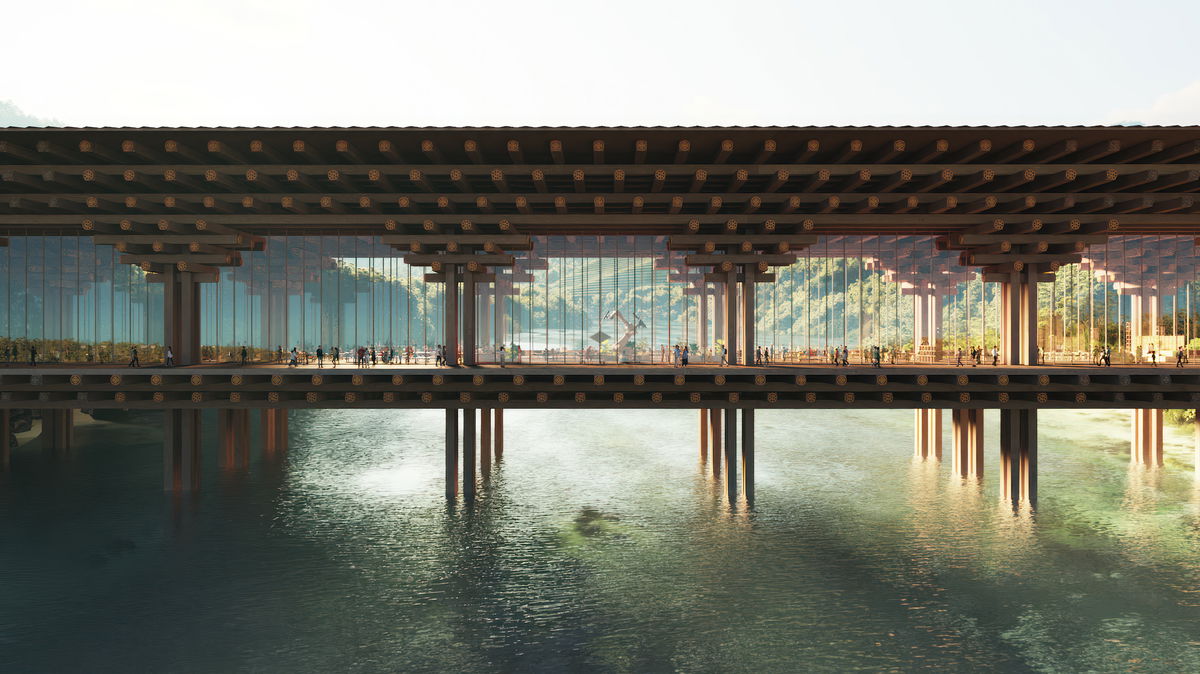
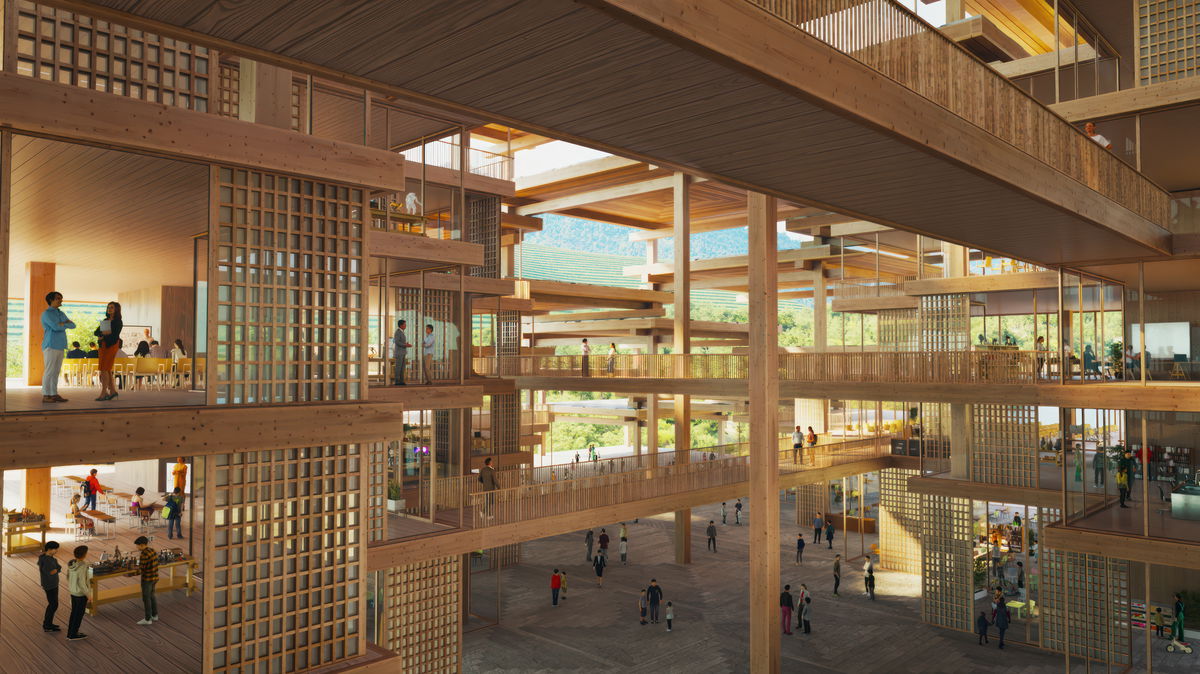
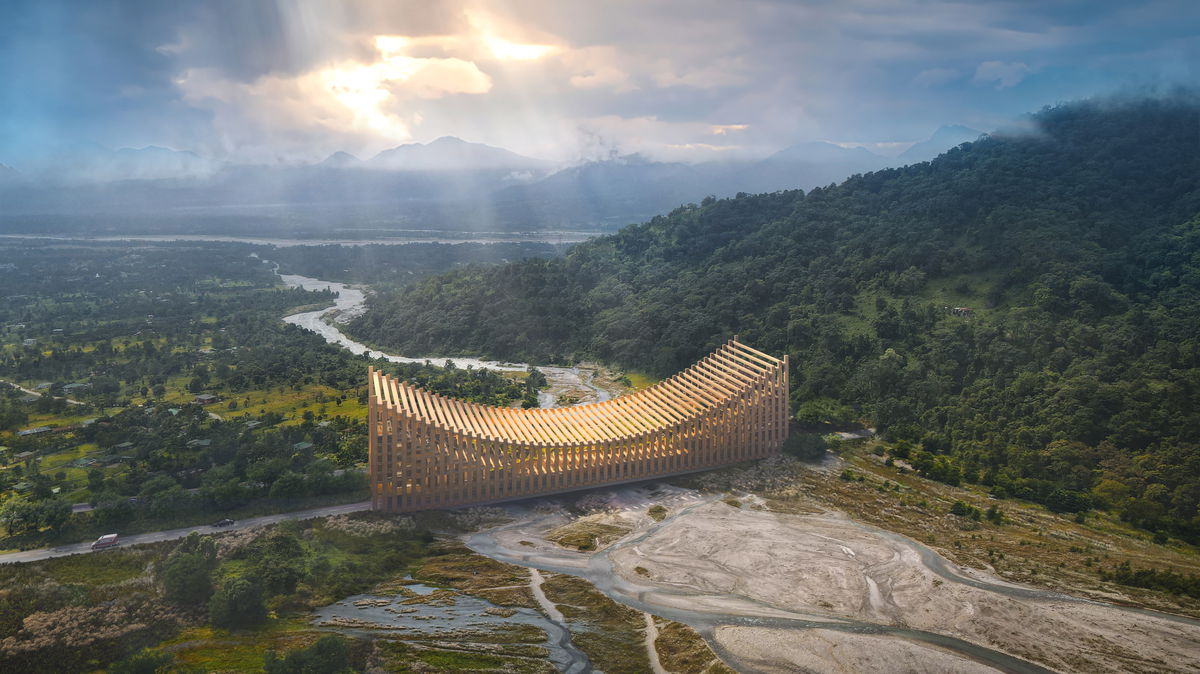
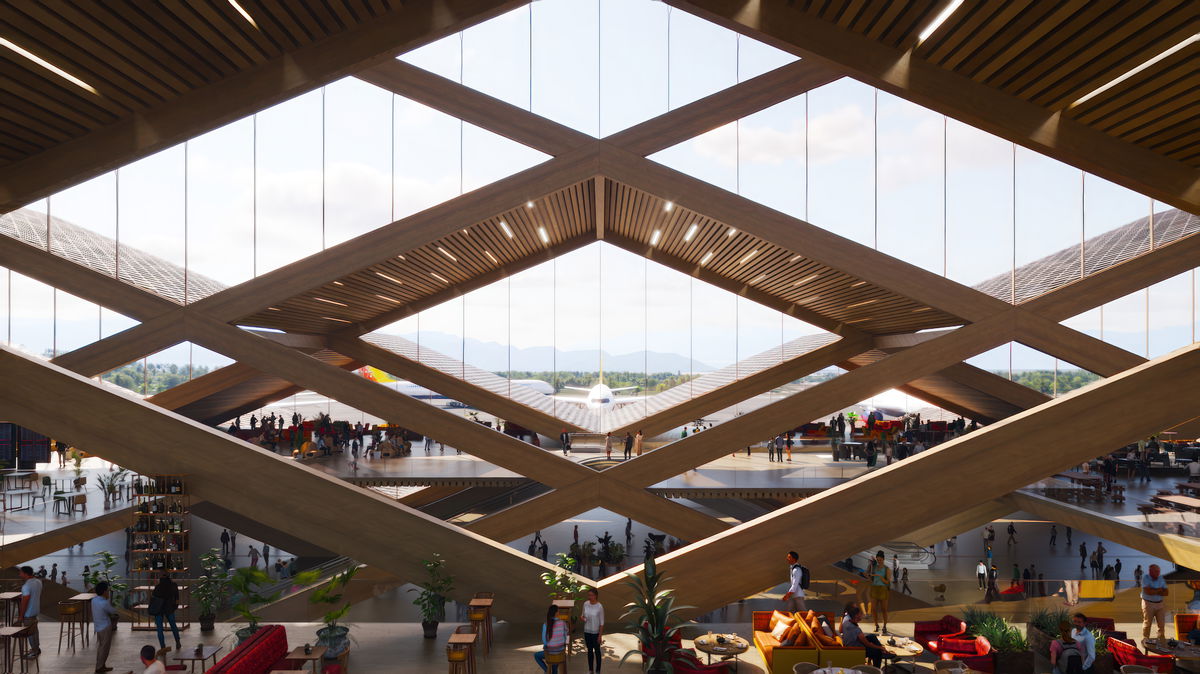
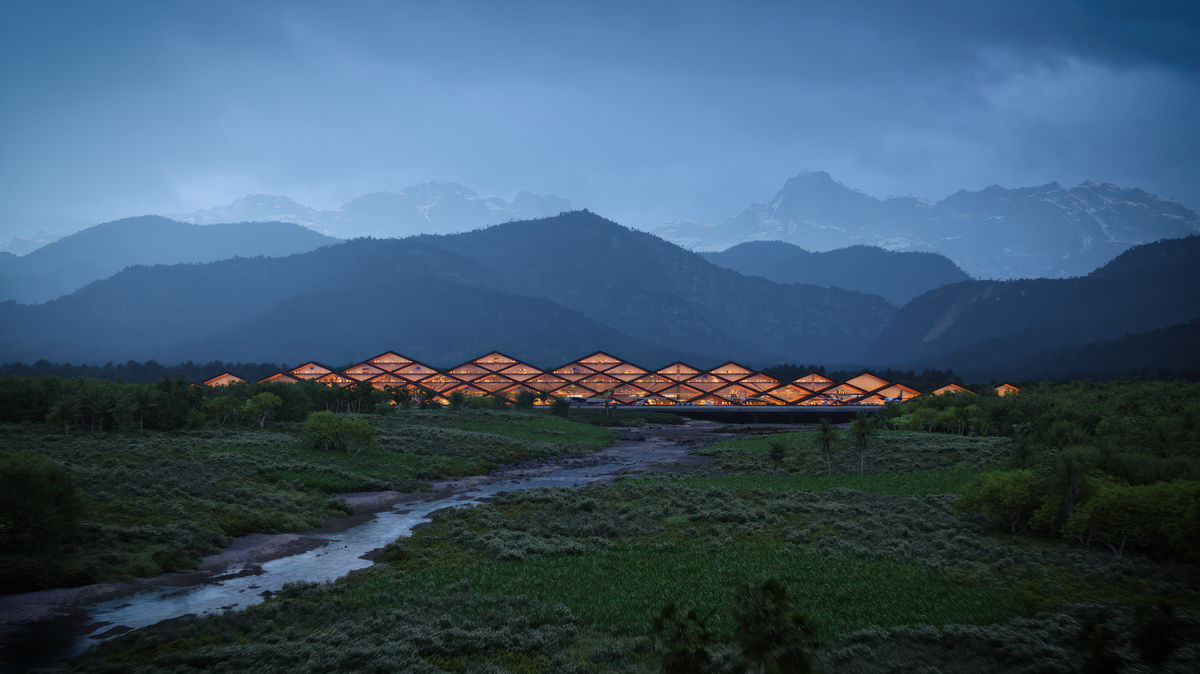
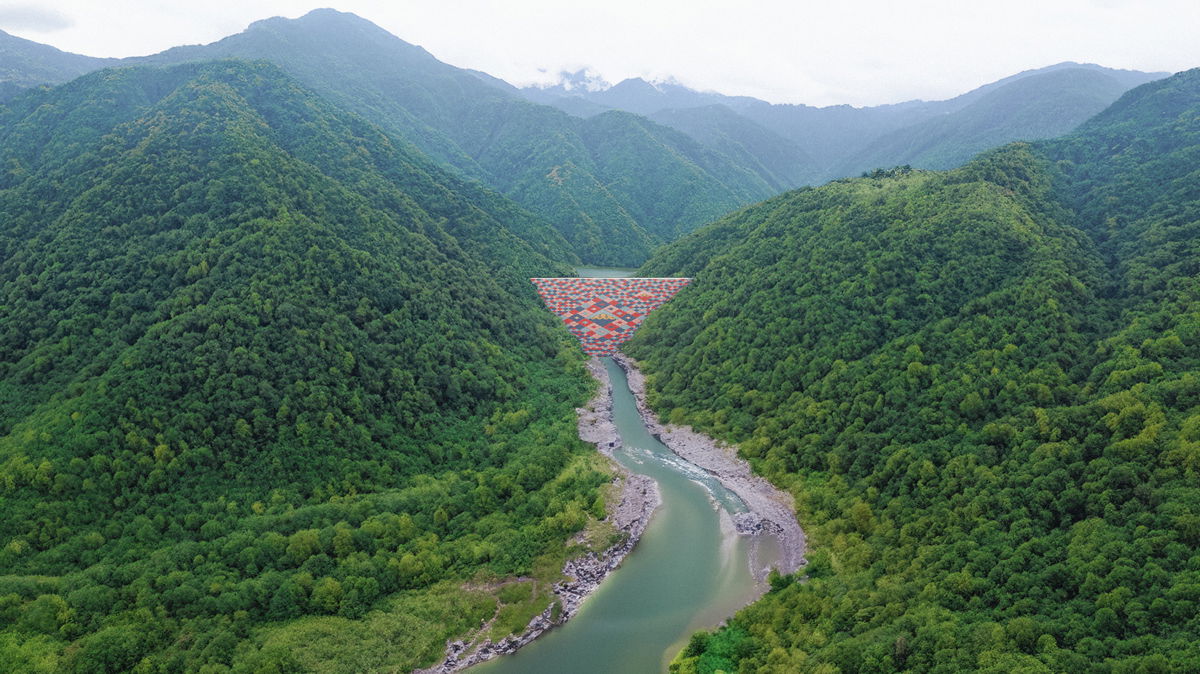
— A series of inhabitable bridges link urban and natural environments.

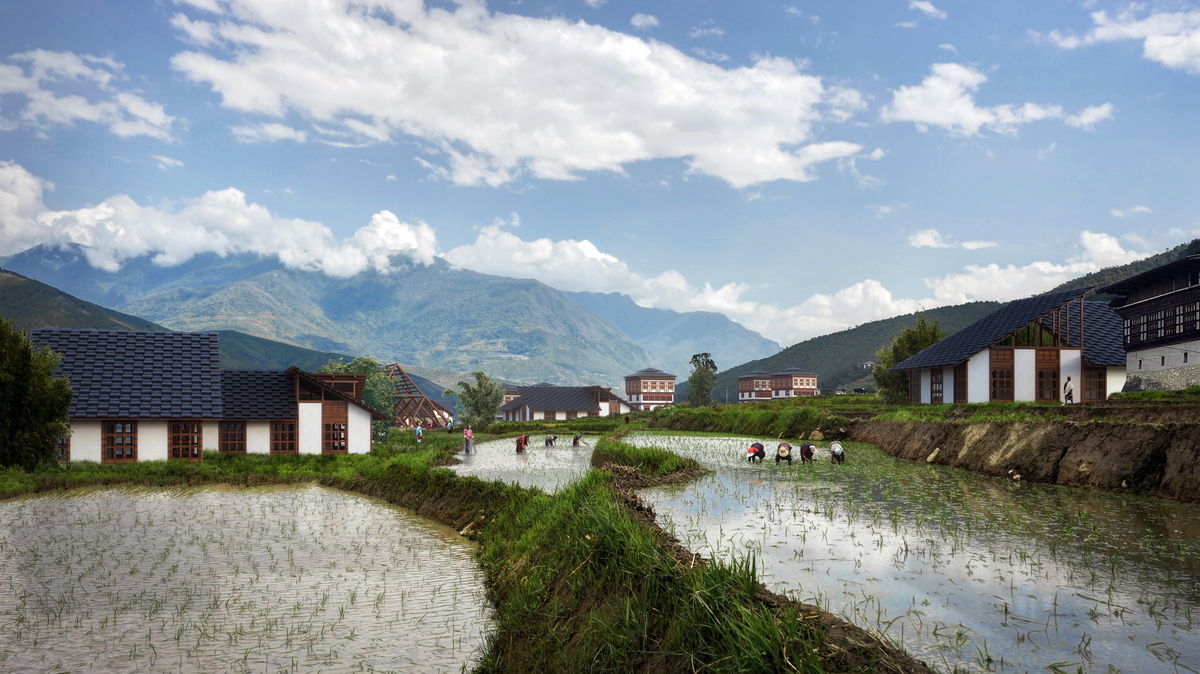

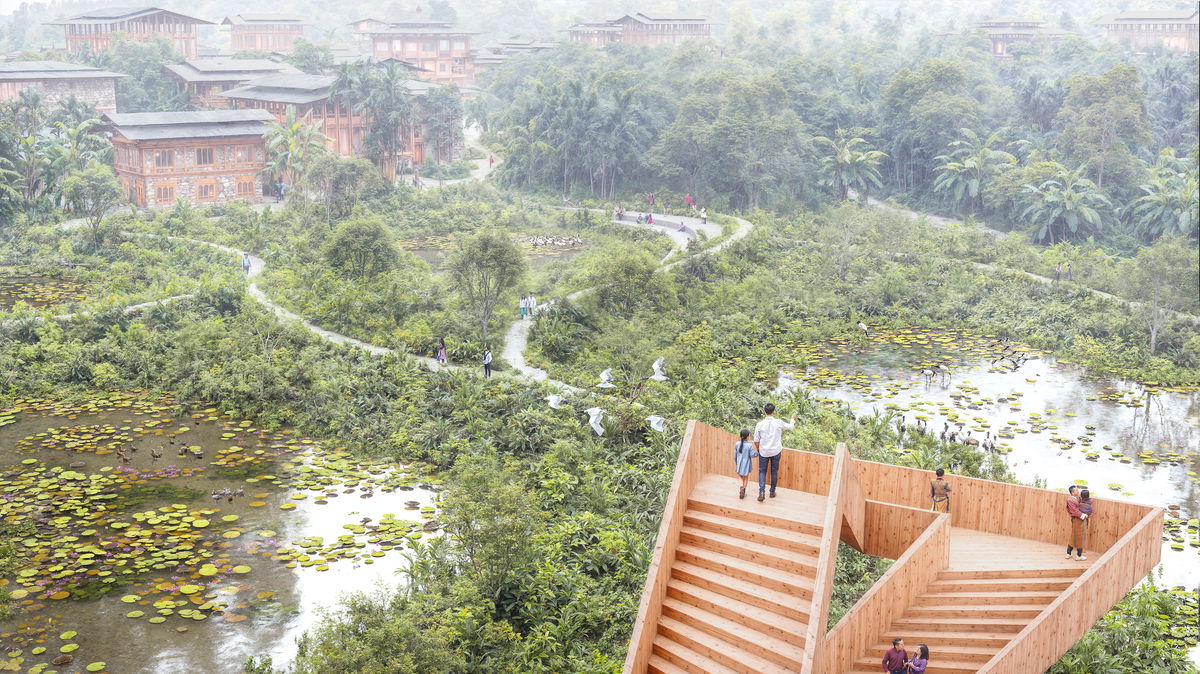
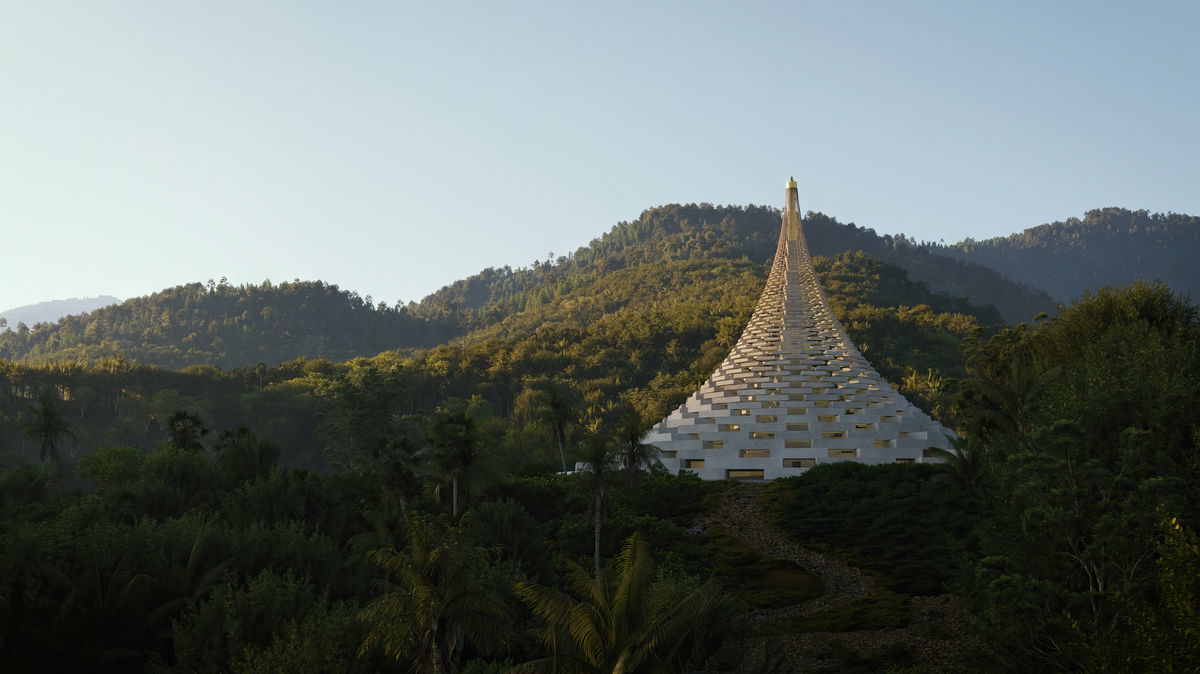
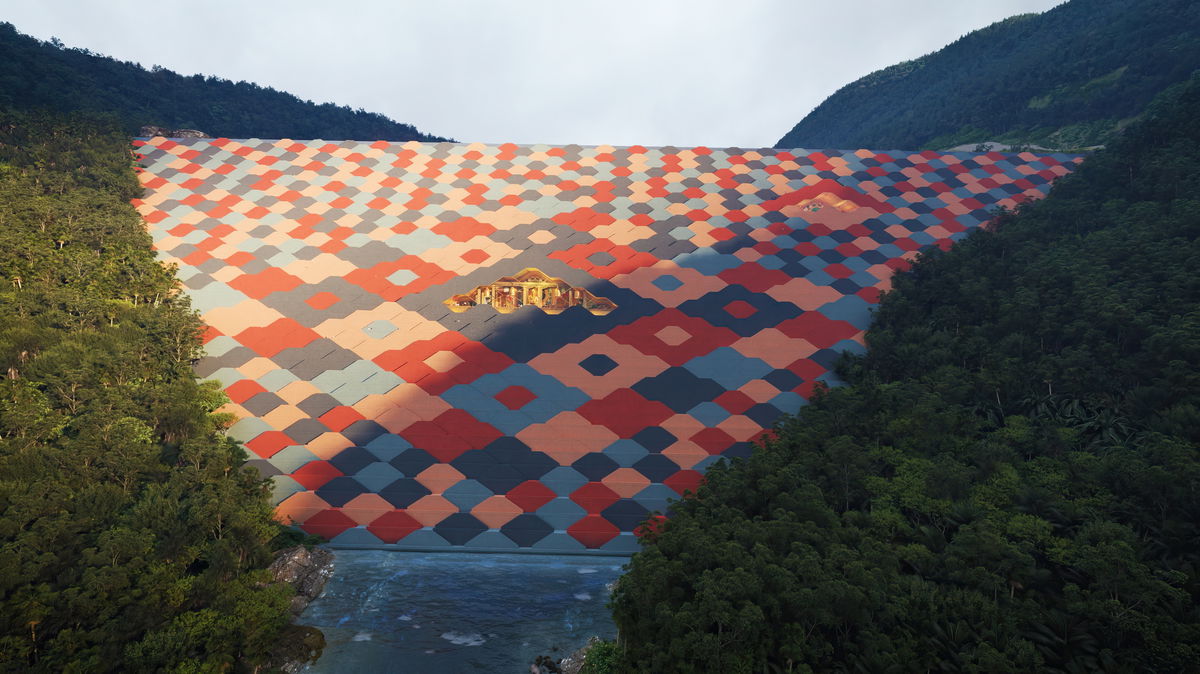
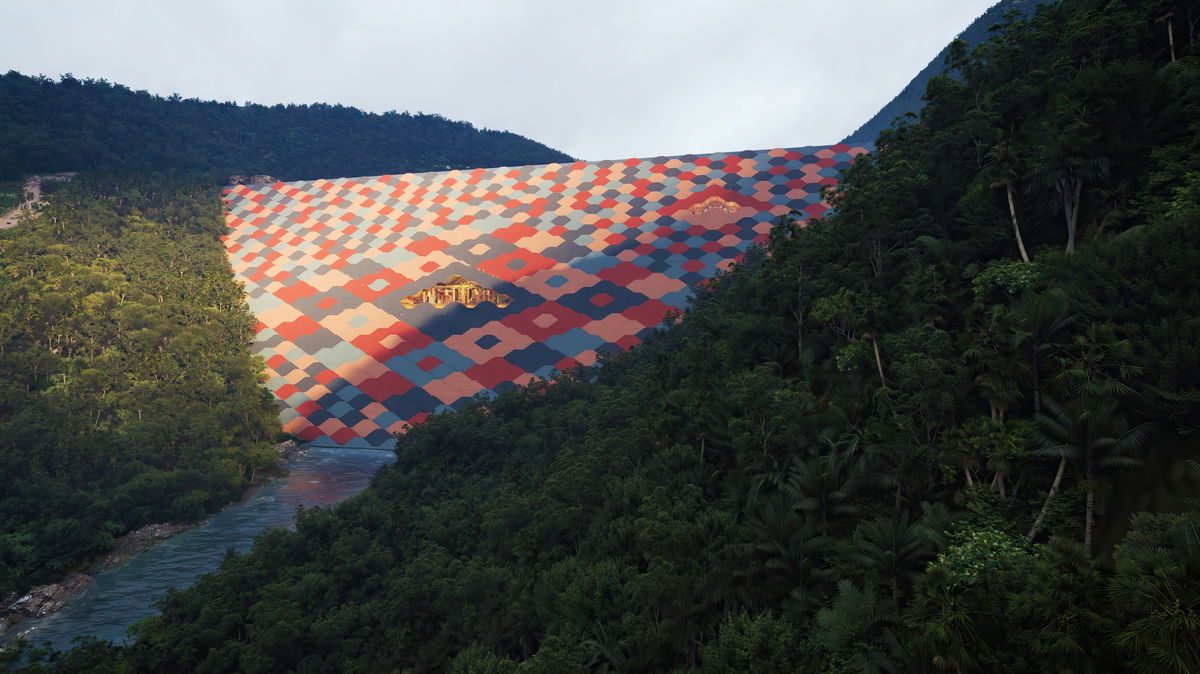
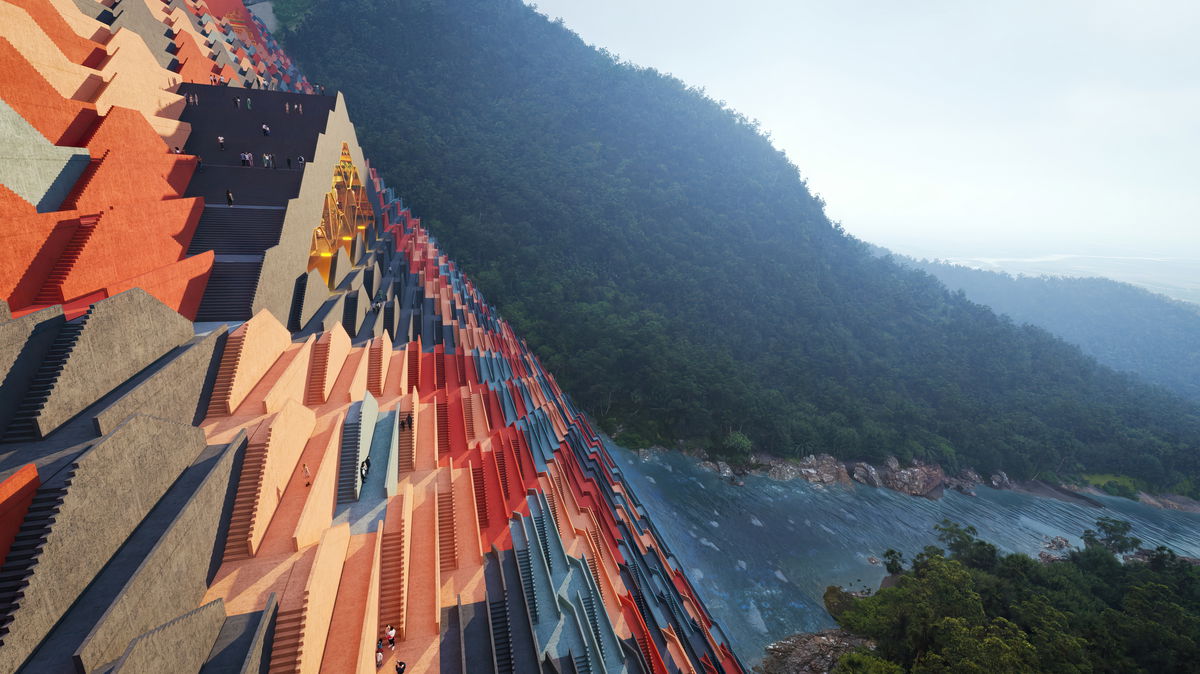
“The Gelephu Masterplan gives form to His Majesty’s vision to create a city that becomes a cradle for growth and innovation while remaining founded on Bhutanese nature and culture. We imagine the Mindfulness City as a place that could be nowhere else. Where nature is enhanced, agriculture is integrated, and tradition is living and breathing, not only preserved but also evolved. Shaped by waterways, Gelephu becomes a land of bridges, connecting nature and people, past and future, local and global. Like the traditional Dzongs, these inhabitable bridges turn into cultural landmarks, doubling as transportation infrastructure combined with civic facilities. Among these, the Sankosh Temple-Dam embeds the city’s fundamental values into a cascading landscape of steps and landings, that like a 21st century Tigers Nest will be a manmade monument to the divine possibility of a sustainable human presence on earth. Turning engineering into art and turning the forces of nature into power."Bjarke Ingels - Founder and Creative Director, BIG – Bjarke Ingels Group

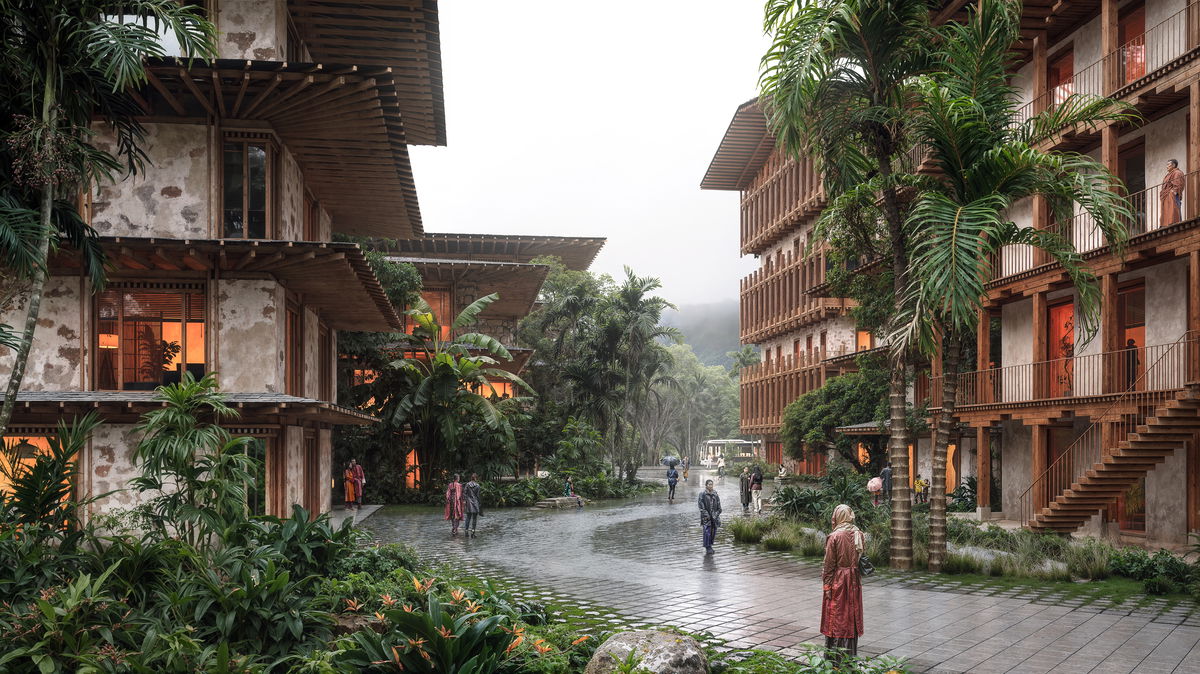

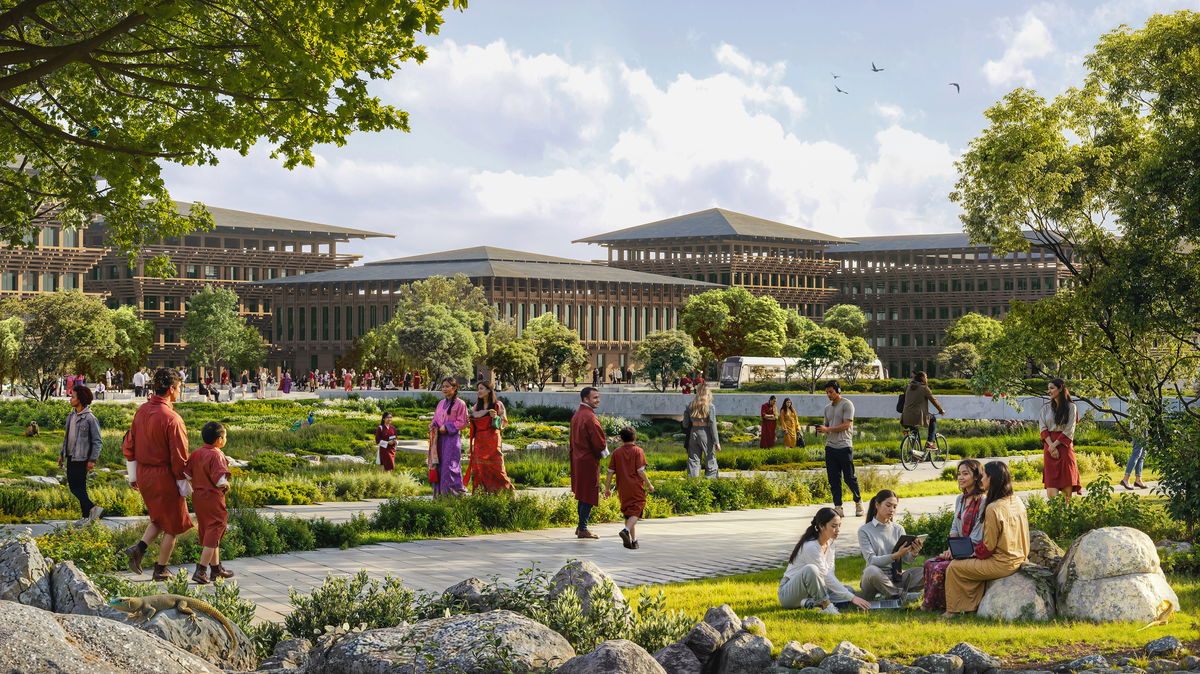

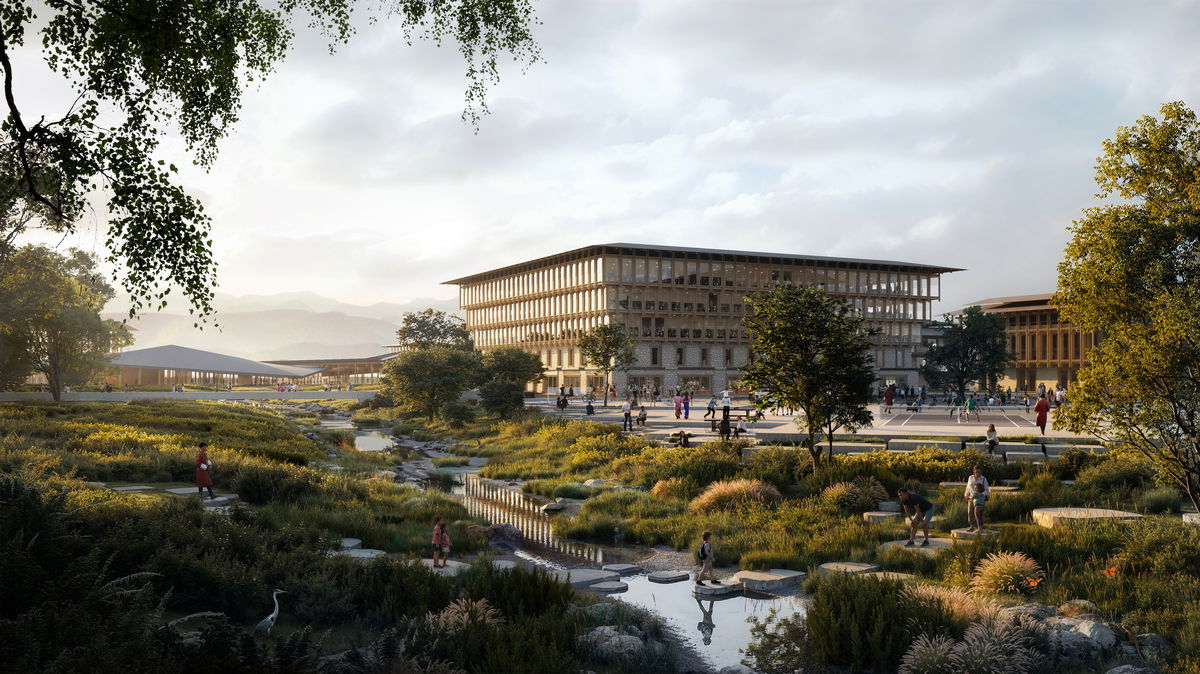

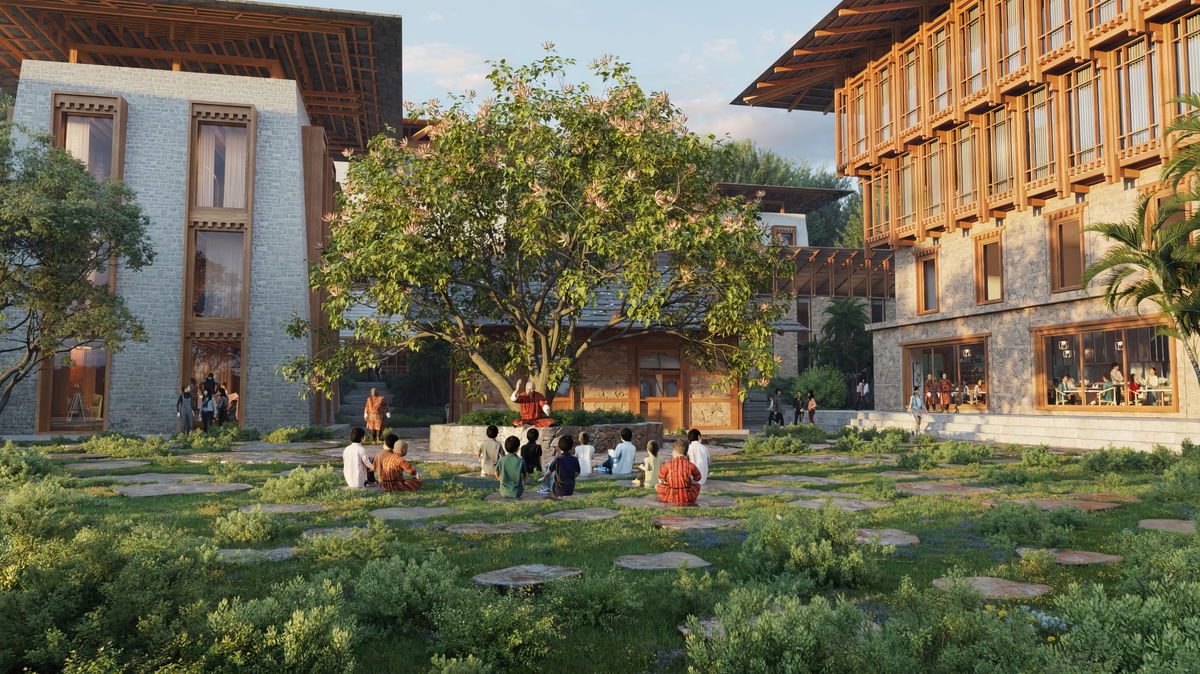
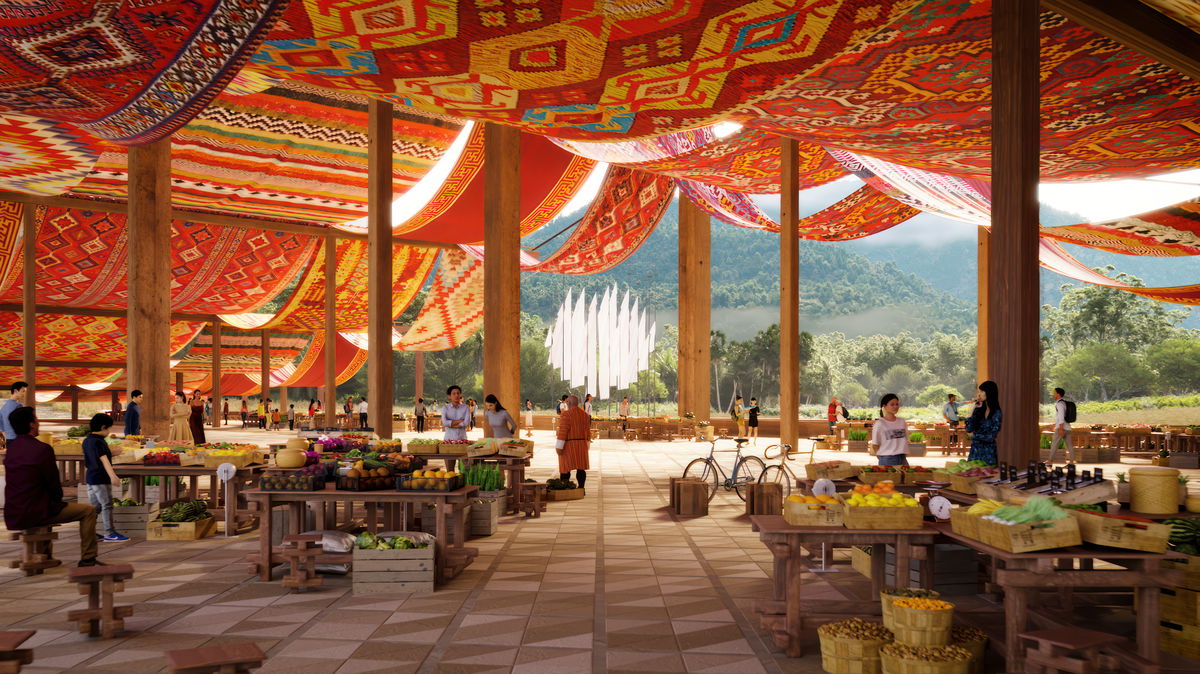
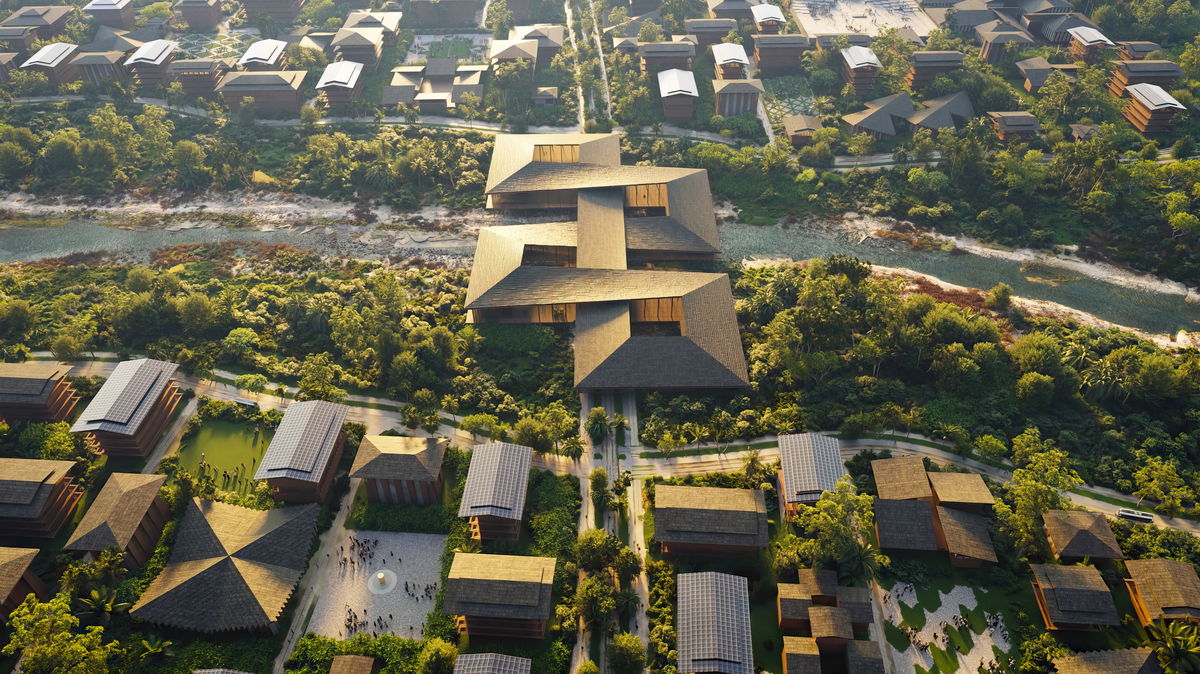
“Inspired by the Bhutanese culture of respect and compassion for others and nature, the Mindfulness City is designed to enhance ecological systems, through an urban development that connects flora and fauna, as well as people and ideas. It becomes a testament of humanity's inseparable bond with nature, and a global example of how to build a sustainable human presence on Earth.”Giulia Frittoli - Partner in Charge, BIG – Bjarke Ingels Group


Partner in Charge
Bjarke Ingels
Frederik Lyng
Giulia Frittoli
Ole Elkjær-Larsen
Project Manager
Clara Mendiguren
Nanna Gyldholm
Per Bo Madsen
Stefan Victor Delvoye
Design Lead
Ahmad Altahhan
Dace Gurecka
Project Team
Aanchal Ashok Tejwani
Adrianna Szmidt
Alessandro Sciolari
Anastasiia Golub
Atibadi Brugnano
Camille Castillo
Claudia Jaegerman
Elisabeth von Korff
Filip Radu
Filippo Cartapani
Floris Dreesmann
Gaspard Del Marmol
Giancarlo Albarello Herrera
Giuseppe Mercuri
Graham Forrest Jordan
Hancong Ding
Jakob Henke
Jian Long
Job Schobre
Kai Siyu Tian
Kateřina Krchňáková
Krisha Arunkumar
Laura Watte
Lucia Hurtado Ayala
Mantas Povilaika
Margaux Caboche
Marius Tromholt-Richter
Matthew Goodwill
Matthew Oravec
Mengran Zhang
Mónica Galiana Rodriguez
Monika Dauksaite
Neele Maree Ohlrogge
Parastoo Salehi Farhadpour
Riccardo Abagnale
Sophie Andrews
Sophie Høg
Stine Daude
Tara Ghesmatiaghkand
Teresa Malchiodi Albedi
Xian Chen
Xinyu Zhao
Xu Lian
BIG Engineering
Andrea Hektor
Anna Sofie Kirstine Krøyer Julius
Cristina Minguela
Fernando Villalobos Lopez
Jens Max Jensen
Konstantinos Koutsoupakis
Miles Treacy
Thomas Lejeune
BIG Sustainability
Chiara Gargiulo
Ivan Ares Igrexas
Johannes Alexander Hackl
Praveen Lalitha Kishorekumar
Victor-Antoine Delorme
Will Chuanrui Yu
Awards
Holcim Foundation Award for Sustainable Construction, 2025
Collaborators
MQDC
NACO
Cistri
Arup
CDR
ERM